
Treatment
Teeth whitening
From £395
Brighten your smile safely with dentist-prescribed whitening trays and tailored shade guidance.
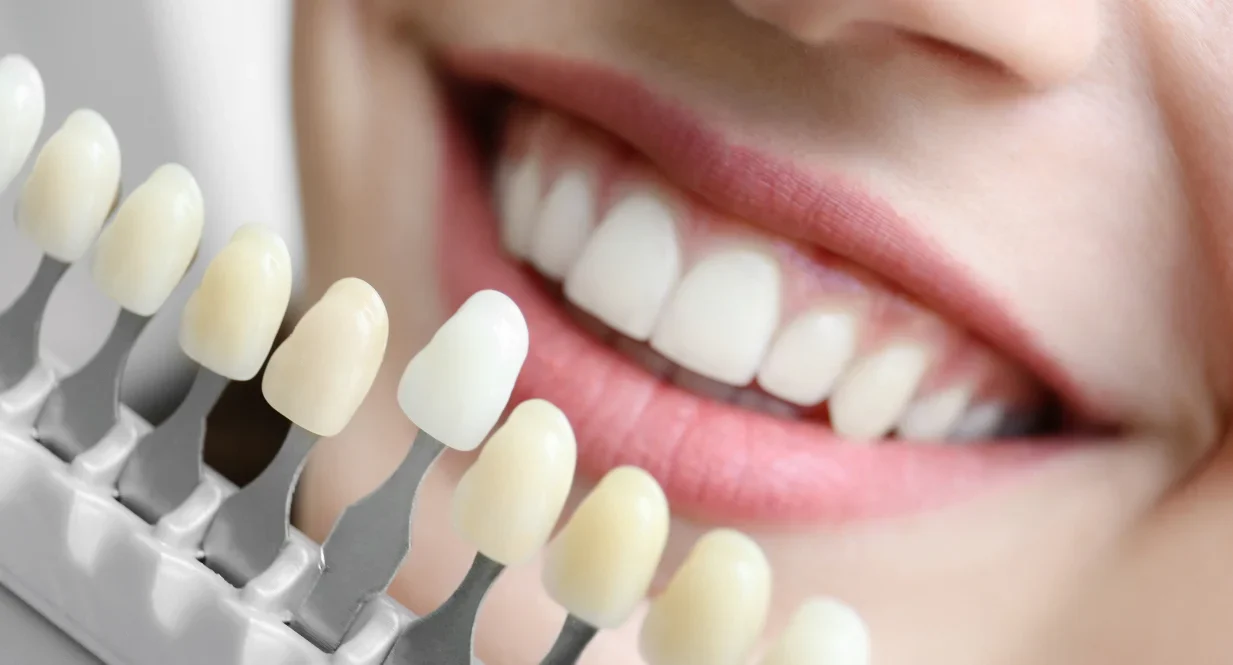
Overview
An even, natural lift that holds — and that you can top up yourself.
Whitening is one of the most predictable things dentistry can offer. A peroxide gel breaks down the pigment molecules held within the tooth, lightening the natural shade from the inside. No tooth tissue is removed, and correctly carried out it does not weaken enamel.
Done properly it produces a lift of several shades that reads as your teeth on a good day rather than as a treatment. And because you keep your trays afterwards, a night or two of gel every six to twelve months holds the result for years at very little cost.
Why whitening belongs in a dental practice
Whitening works best when someone has looked at your teeth first — and the difference between a professionally prescribed result and a shop-bought one is not marketing, it is three specific things.
A dentist can identify what is actually causing your discolouration, and therefore whether it will respond. General age-related yellowing lightens beautifully. Internal staining from an old injury, from tetracycline, or from a root-treated tooth behaves differently and needs a different approach. Knowing which you have before you start is the difference between a result and a disappointment.
A dentist can confirm the teeth and gums are healthy enough for treatment. Whitening gel over an undiagnosed cavity or inflamed gum is genuinely painful, and no home kit checks for either.
And only a dentist can supply gel at the concentration that actually works, and make trays fitted to your own teeth that hold it against the tooth surface and away from the gum. That combination is what produces an even lift rather than a patchy one, and it is the single biggest reason professionally whitened teeth look natural.
Process
Measured stages from first conversation to review.
Assessment
Examination for decay, gum disease, cracks and sensitivity, and identification of what is causing the discolouration. Your starting shade is recorded and photographed so the change can be shown objectively rather than remembered.
Impressions and trays
Impressions or a digital scan, from which thin custom trays are made. Usually ready within a week.
Fitting and instruction
Trays checked for fit, gel supplied, and technique shown — how much gel, how long to wear them, and what to do if teeth become sensitive.
At home
Worn as prescribed, typically over two to three weeks. Some people prefer overnight, others a shorter daytime period. Both work with the appropriate gel strength, and it fits around your life rather than the other way round.
FAQs
Common questions.
Is professional teeth whitening safe?
Yes. Prescribed and supervised by a dentist using regulated products, whitening is well studied and considered safe. It does not soften or remove enamel. The risks people associate with whitening come almost entirely from unregulated products and untrained operators.
How white will my teeth go?
It depends on your starting shade and what is causing the discolouration. Most people achieve a noticeable lift of several shades. Your starting shade is photographed at the outset so the change can be shown objectively, and a realistic expectation is set before you begin rather than after.
Why can't I just buy a whitening kit online?
Kits sold directly to the public either contain more peroxide than is legal to supply, which risks burns to gums and lips, or so little that nothing happens. Neither includes anyone checking for decay or gum disease first, and neither includes trays made to your teeth — which is where an even result comes from.
Does teeth whitening hurt?
Some sensitivity to cold during treatment is common and usually short-lived. It is managed by adjusting how long you wear the trays or using a desensitising gel. Persistent or severe sensitivity should be reported rather than endured, and it can almost always be settled.
Will whitening work on my crowns and fillings?
No. Only natural tooth structure responds to whitening gel. Crowns, veneers and white fillings stay exactly as they are, and if any are visible at the front they may need replacing afterwards to match. This is assessed and costed before you start.
Should I whiten before or after veneers?
Before, always. Ceramic cannot be lightened once made, so whitening first and matching the new work to the lighter shade is the only sequence that works. Allow a couple of weeks for the shade to stabilise in between.
Do whitening toothpastes and charcoal products work?
Whitening toothpastes remove surface stain but do not change the underlying shade, and some are abrasive. Charcoal products have no good evidence behind them and several are abrasive enough to be counterproductive on teeth that are already worn.
How long before a wedding should I start whitening?
Allow six to eight weeks. That covers the whitening itself, time for the shade to stabilise, time for any sensitivity to settle, and time to match or replace visible dental work afterwards if needed.
Clinically reviewed by Dr Ahmed Jebril on 27 July 2026.
Next step
Discuss teeth whitening with the team.
Share what you are hoping to improve and the practice will help identify a sensible next step.