Treatment

Porcelain veneers

From £1,500

Refine tooth shape, shade, and symmetry with conservative cosmetic ceramics planned for a natural finish.

Overview

A well-made veneer should look like a tooth you were born with.

Veneers are minimally invasive ceramic facings that are bonded to your underlying tooth structure.

They aim to have a depth and translucency that reads as enamel rather than as dentistry. Bonded to the right teeth and made by a good technician, a veneer changes the shape, shade or apparent position of a tooth in a way that looks remarkable and natural.

When something else will serve you better

Our expertise allows an honest conversation on whether veneers are actually the right tool.

Whitening is a fantastic, minimally invasive option to achieve the shade change on its own, for a fraction of the cost and with nothing removed. Composite bonding may correct the shape without touching enamel, and can be adjusted or taken off.

Veneers come into their own where the shape or surface of the tooth is the actual problem, where several front teeth need to work together as a set, or where composite has been tried and has not achieved the desired outcome.

What a specialist assessment adds

Cosmetic front-tooth work is where the gap between a good result and a disappointing one is widest, and where the disappointing version is permanent.

An assessment here establishes whether your gums, bite and enamel will support veneers in the first place — untreated grinding is a leading cause of veneer failure and is frequently missed. It also establishes how many teeth genuinely need treating, which is often fewer than expected. And it produces a design you approve before anything is prepared, rather than a description you agree to and see for the first time when it is already bonded on.

Process

Measured stages from first conversation to review.

  1. Assessment

    What you want changed, and whether veneers are the right way to change it. Examination of gum health, bite, and any wear or grinding.

  2. Records and design

    Photographs, study models, and a wax-up of the proposed result. A trial smile can be placed directly onto your teeth so you can see and photograph the shape before anything is prepared.

  3. Preparation and temporaries

    Minimal enamel reduction guided by the design you approved, then a scan or impression. Temporary veneers reproduce the agreed shape, so you keep living with the design while the ceramics are made.

  4. Try-in and fit

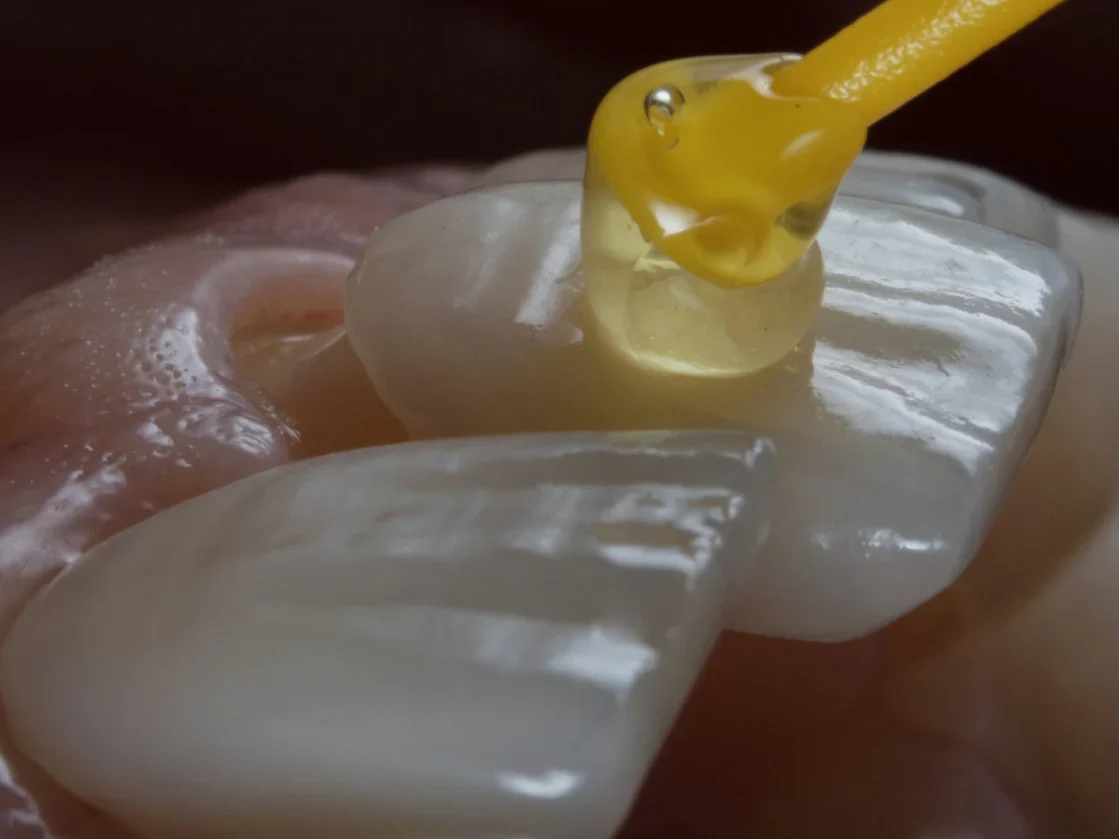
    Veneers are tried in with a trial paste before bonding, so shade and shape can be checked in your mouth, in daylight, with your agreement, before anything becomes permanent.

Suitability

Who this treatment may suit

  • Front teeth are chipped, worn at the edges, or misshapen
  • Teeth are discoloured in a way whitening will not resolve
  • There are gaps you would like closed and orthodontics is not wanted
  • Several front teeth need to work together as a matched set
  • Composite has been tried and has repeatedly chipped or stained
  • Your enamel is sound and your gums are healthy

FAQs

Common questions.

Do veneers ruin your teeth?

No, but they permanently change them. Preparation removes enamel that cannot be replaced, so the tooth will need a veneer or crown from then on. Minimal-preparation techniques reduce how much is removed, and occasionally none is needed at all.

How many veneers will I need?

It depends how far the change extends across your smile and how wide your smile is when you speak. Four, six and eight are the usual numbers. This is assessed with photographs so you can see exactly where the natural transition point falls.

Will porcelain veneers look fake?

They will if they are made too white, too uniform and too opaque. Natural teeth vary in shade along their length and have translucent edges. Reproducing that variation is what makes veneers look real — and the trial smile is where you decide how natural you want the result.

Can I whiten my teeth after having veneers?

No. Ceramic does not respond to whitening gel. If you want lighter teeth, whiten first, let the shade stabilise for a couple of weeks, then match the veneers to it.

What if I grind my teeth?

That needs addressing first, since grinding is a leading cause of veneer chipping and debonding. A protective splint would normally be part of the plan, and in some cases composite is recommended instead because it is far easier to repair.

Do veneers stain?

The ceramic does not. The margin where veneer meets tooth, and the natural tooth around it, can pick up staining over years — which is an argument for regular hygiene visits rather than for avoiding coffee entirely.

Can a single veneer be replaced if it chips?

Yes, though matching one new veneer to neighbours that have aged is harder than making a set together. Small chips can sometimes be polished or repaired with composite instead.

Veneers or composite bonding — which is better?

Neither is simply better. Composite is additive, adjustable, repairable and reversible, but stains more and needs more upkeep. Ceramic is more durable and more stain-resistant, but irreversible and more expensive. The right answer depends on your teeth and how you want to spend.

Callback

Discuss porcelain veneers with the team.

Share what you are hoping to improve and the practice will help identify a sensible next step.

Request a Callback

Clinically reviewed by Dr Ahmed Jebril on 27 July 2026.

Porcelain Veneers in Guildford | From £1,500 | Eastdale Dental | Guildford