Treatment

Dental implants

From £2,950

Replace missing teeth with stable, natural-looking implant restorations planned around your bite and smile.

Overview

A tooth you can bite into, brush normally, and stop thinking about.

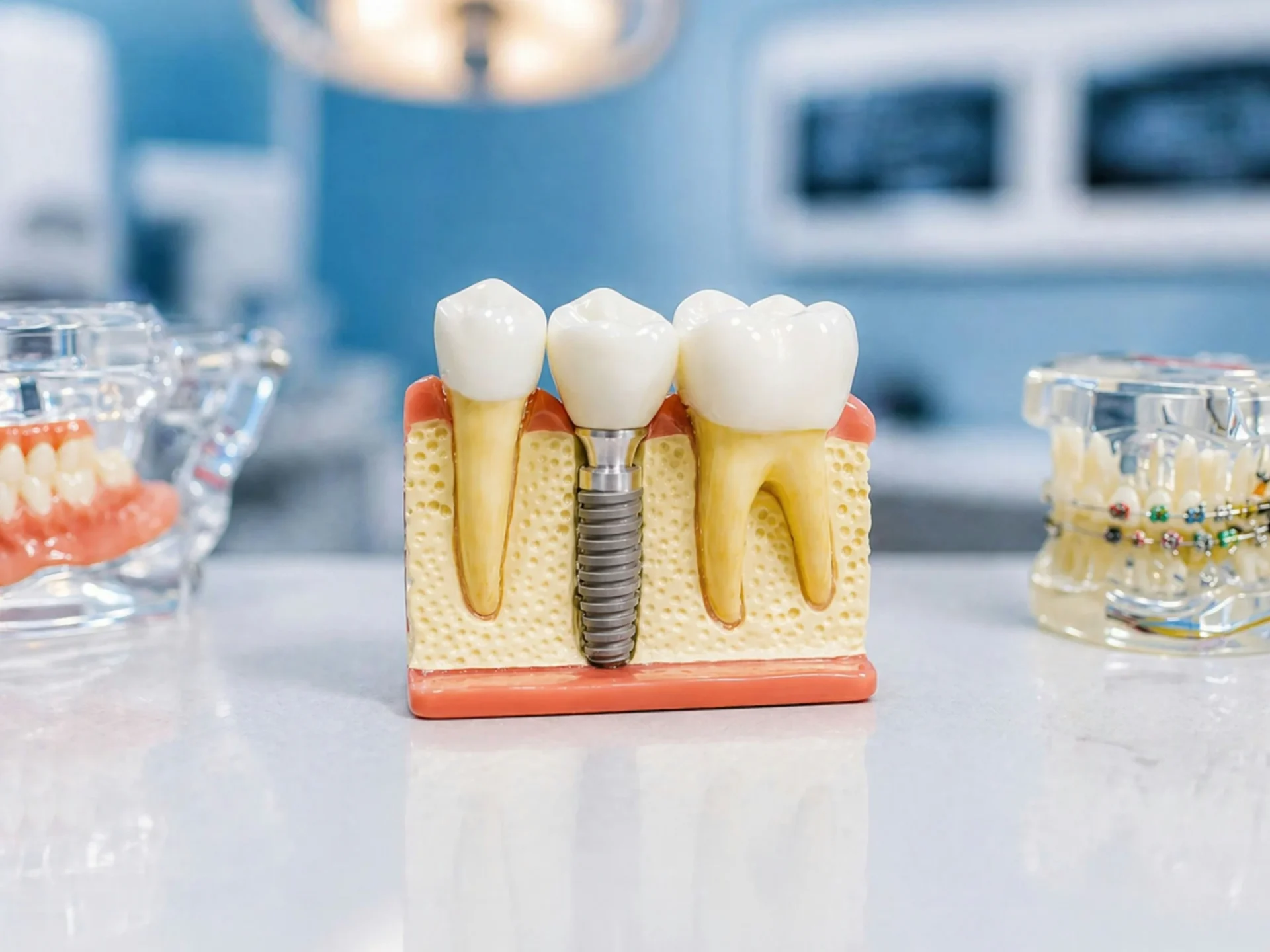
Dental Implants are a surgical approach to reliably replace missing teeth.

Implants can often be confusing, put simply, a dental implant is a small titanium post that replaces the root of the missing tooth, bone grows into contact with its surface in a similar way to a hip or knee replacement, providing strength and rigidity. A crown is then made to sit on top — matched to the teeth around it, fixed in place, and cleaned like any other tooth.

No adhesive, nothing removable, and nothing done to the healthy teeth either side.

What a specialist assessment adds:

Implants are widely available, and a good deal of implant dentistry is done well by general practitioners.

What a restorative specialist brings is the whole-mouth view: whether an implant is the right answer for this particular gap, whether something more conservative would serve you better, how the implant will sit within your bite over decades, and how it relates to any other work you are likely to need.

Process

What the treatment involves

  1. Step 1 — Assessment and imaging

    Examination, radiographs, and usually a 3D scan showing bone volume and the position of nearby structures. Where bone is thin, grafting may be recommended either beforehand or at the same appointment.

  2. Surgery

    Carried out under local anaesthetic, and most people describe it afterwards as more straightforward than the extraction that preceded it. A healing period of three to six months follows while the implant integrates, and a temporary tooth is normally provided so you are not without one.

  3. Restoration

    A scan or impression, then the final crown — shaped and shade-matched to the teeth around it, and adjusted so the bite loads it properly.

  4. Maintenance

    Regular review and professional cleaning around the implant, for as long as you have it.

Suitability

Who this treatment may suit

  • One or more teeth are missing and it is affecting how you eat or how you feel about your smile
  • Gum health is stable, or can be made stable first
  • There is enough bone, or grafting is acceptable to you
  • You would prefer something fixed to something removable
  • You would rather not cut down healthy teeth to carry a bridge
  • You are happy to maintain it properly

FAQs

Common questions.

Does having a dental implant placed hurt?

Placement is done under local anaesthetic, so you feel pressure rather than pain. Most people report less discomfort afterwards than they expected and manage with ordinary painkillers for a day or two. Many say it was easier than the extraction beforehand.

How much do dental implants cost in Guildford?

At Eastdale a single implant with its crown starts at £2,950, in a case not needing grafting or additional surgery. Consultation, 3D imaging, extractions and bone work are quoted separately, and you receive a written itemised estimate before committing to anything.

How long will I be without a tooth?

Rarely without one at all where the gap shows, since a temporary tooth is normally provided from the outset. The permanent crown is fitted after the implant has integrated, usually three to six months after placement.

What if I don't have enough bone for an implant?

Bone can often be built up, either beforehand or at the time of placement. Whether that is worthwhile depends on how much is missing and on your preferences, and it is discussed with the 3D scan in front of you so you can see what is being described.

Can I have dental implants if I smoke?

This will be discussed frankly, and cutting down or stopping around the time of surgery makes a real difference to the outcome.

Will the implant tooth match my other teeth?

That is the aim and it is usually achievable. Matching a single front tooth against a natural neighbour is one of the more demanding jobs in dentistry, and shade and shape are agreed with you before the crown is finalised.

How do I clean around a dental implant?

Brushing as normal, plus cleaning between the teeth with whatever suits the space — interdental brushes, floss, or a water flosser. You will be shown specifically what works for yours, and this matters more than most people expect.

Is an implant better than a bridge?

Not universally. An implant avoids touching the neighbouring teeth and helps preserve bone. A resin-bonded bridge avoids surgery, costs less, and is often excellent for a single front tooth. Which is better depends on your situation.

What happens if an implant fails?

Early failure is uncommon and usually means removing the implant, allowing healing, and reassessing. Later problems are more often bone loss around an integrated implant, which is generally managed rather than automatically requiring removal.

Callback

Discuss dental implants with the team.

Share what you are hoping to improve and the practice will help identify a sensible next step.

Request a Callback

Clinically reviewed by Dr Ahmed Jebril on 10 August 2026.